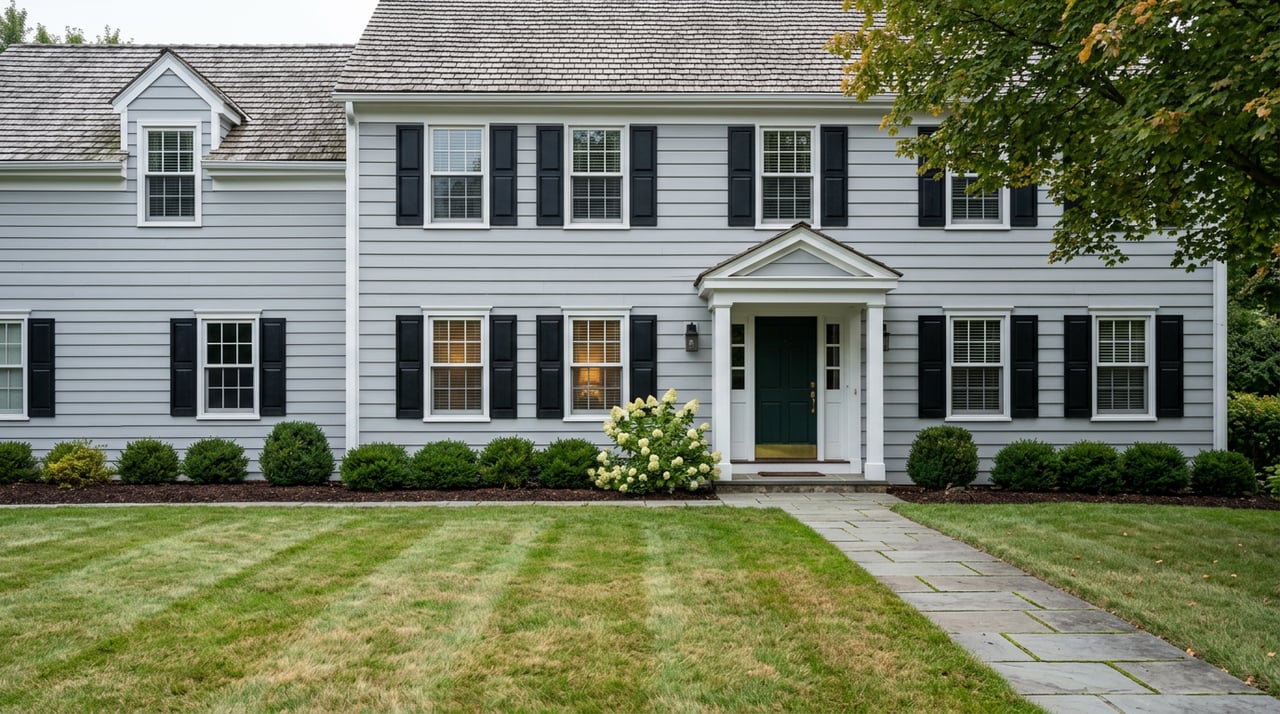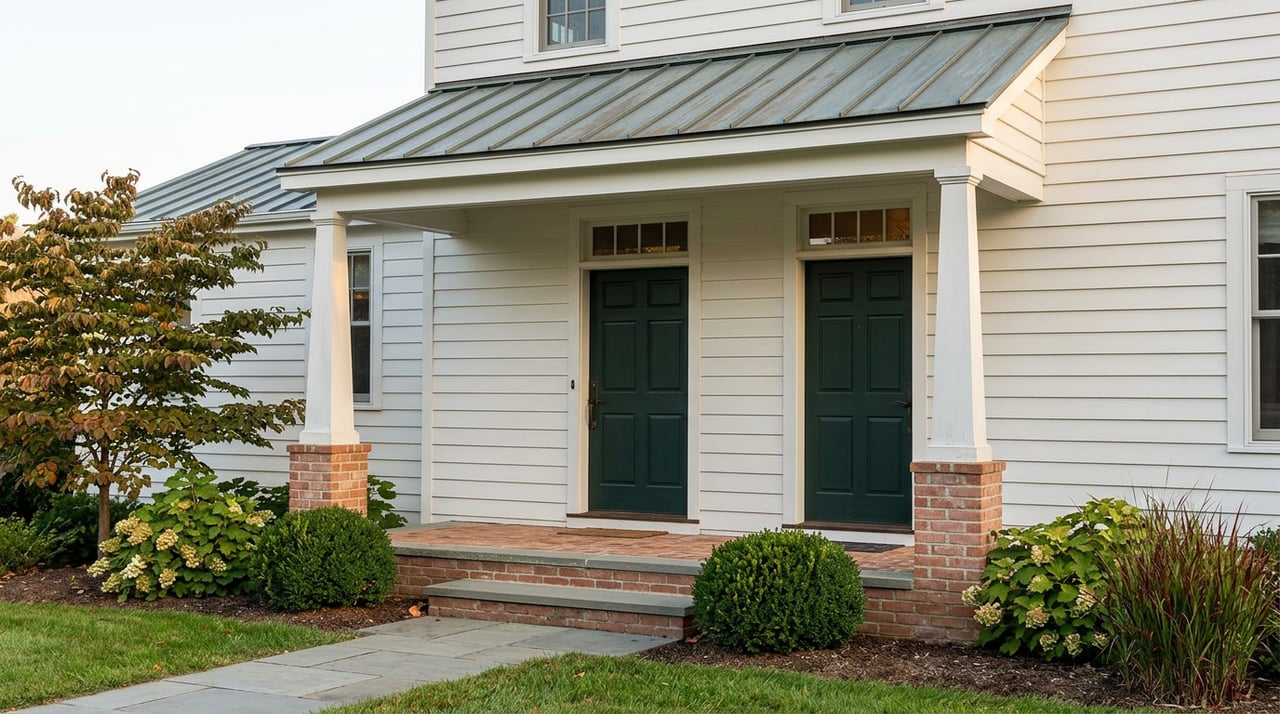
Scroll through two-family listings in Glen Cove long enough and you start to notice a pattern in the language. One listing calls itself a "great legal two-family home" and leans into the rental income angle. The one three streets over just says "two-family" and moves on to the kitchen renovation. Same city, same housing type, same buyer pool. Different word choice.
That word is not filler. In Glen Cove, "legal" is a paperwork claim about what the Certificate of Occupancy actually says the house is. And whether a listing can make that claim, cleanly, is one of the more common things that slows down a closing here compared to the single-family villages nearby.
Two houses, two different paperwork problems
Picture two similar two-family homes going under contract in Glen Cove the same month. Both have a first-floor unit and a second-floor unit. Both have been rented out for years. Both look, from the street, identical.
In the first house, the current Certificate of Occupancy on file with the city's Building Department matches reality: two dwelling units, both legally created, both properly egressed. The buyer's attorney pulls the CO, confirms it, and the file closes without drama.
In the second house, the CO on file describes a one-family home with an accessory space in the basement, because that is what the house was when it was built and the upstairs conversion was never formally closed out with the city. The rental income is real. The tenant is real. The paperwork trail that would make the second unit legal never got finished.
Both sellers can tell you their house has two units. Only one of them can prove it to a title company, a lender, and an attorney who is going to ask.
Why this shows up more in Glen Cove than in Locust Valley or Glen Head
This is not a quirk that follows every North Shore address equally. It concentrates in Glen Cove because of what the city's housing stock is actually made of.
According to Census-based housing counts for Glen Cove reported by NeighborhoodScout, single-family detached homes make up 48.78 percent of the city's housing units. That leaves more than half the city in something else: 25.41 percent in large apartment complexes or high-rises, and 21.84 percent in duplexes and homes converted to apartments or small apartment buildings. The same data shows the city almost evenly split between owners and renters, at 49.61 percent owner-occupied versus 50.39 percent renter-occupied.
Compare that to how most buyers picture the Gold Coast when they start touring: Colonials and Capes on quarter-acre lots, one family per house. That picture is accurate for Locust Valley and most of Glen Head. It is only half accurate for Glen Cove, where converted two- and three-family houses have been part of the housing stock for generations, often quietly, often without every conversion being fully documented at City Hall.
That history is exactly why a buyer's attorney treats a Glen Cove two-family differently than a Glen Head single-family. The question is not "does this house have two kitchens." It is "does the city's own file agree that it should."
The paperwork problem has two separate tracks, and sellers often only know about one
A legal two-family in Glen Cove has to clear two distinct hurdles, and they are not the same hurdle.
The Certificate of Occupancy confirms the physical building matches what the city approved: the number of units, the egress, the layout. Glen Cove's Building Department requires a guaranteed survey showing the building's exact location and, notably, written approval from the city's own Water Department before a CO can be issued for a dwelling unit. That water sign-off is a step some sellers do not expect, because it is not something most other Nassau County villages require in the same way.
The Landlord Registry is a completely separate requirement, and it only applies if the property is a non-owner-occupied rental. Under Article IX of the city's housing code, every one- and two-family rental unit in Glen Cove that is not owner-occupied has to be registered with the Building Department, with the registration valid for two years before it has to be renewed. The city council's own language explaining why this law exists is direct: it points to "a significant number of one-family rental units and two-family rental units, the substantial majority of which are owned and operated by absentee landlords," and notes that violations tied to these properties make up the majority of significant housing prosecutions filed in City Court. You can read the ordinance in full through the city's code enforcement page.
A house can have a perfectly valid CO for two units and still be out of compliance if the registration has lapsed. It can also have an active registration and still fail at the CO stage if the unit itself was never properly permitted. Sellers who assume one covers the other are usually the ones surprised at attorney review.
There is a third wrinkle worth knowing if you are weighing whether an income unit could double as short-term rental income during a slow selling season: it cannot. The same city code bans renting any dwelling unit, or even an accessory structure like a garage or shed, for a period of less than 28 days, anywhere in Glen Cove. That rule is spelled out on the same code enforcement page and applies regardless of what platforms or arrangements might work in other towns.
| What it proves | Where it comes from | What lapses look like |
|---|---|---|
| Certificate of Occupancy | Glen Cove Building Department | Unit exists on paper but was never formally added to the CO; survey or Water Department sign-off missing |
| Landlord Registry | City Code, Chapter 168, Article IX | Registration expired after its two-year term and was never renewed |
| Rental duration | City Code Section 280-45.3 | Any rental under 28 days, on any platform, regardless of unit type |
What this means if you're planning to list a Glen Cove two-family this fall
The fix here is almost never expensive. It is almost always a matter of starting early enough that a paperwork gap does not surface for the first time during attorney review, three weeks before a scheduled closing.
- Pull the current Certificate of Occupancy from the Building Department before you price the house. Confirm it actually describes two units, not one unit with an accessory space that has functioned as a second apartment for years.
- Check the registration status if the property is currently a non-owner-occupied rental. Registrations run in two-year cycles. If yours lapsed and you did not notice, that is a fast fix now and a slow one during contract.
- If the CO and the actual use do not match, talk to the Building Department about what an amended or new CO requires before you go to market, not after you have a signed contract and a buyer's attorney asking questions on a deadline.
- Do not plan on short-term rental income to bridge carrying costs while the home is listed. The 28-day floor applies during your ownership just as much as it would apply to a buyer.
None of this is about whether the house is a good investment. Two-family income properties in Glen Cove remain a real draw precisely because the rental math works in a market where housing costs keep climbing. The paperwork is simply a separate track that has to be run in parallel, and it runs faster when it starts before the listing photos do.
FAQ
Does an owner-occupied two-family still need a CO showing two units? Yes. The Certificate of Occupancy reflects the building's approved use and layout, not who happens to live there. An owner living in one unit and renting the other still needs the CO to show two legal units.
If I sell with a tenant in place, does my Landlord Registry transfer to the new owner? No. Registration is tied to the current owner. A buyer taking over a rented two-family will need to register the property under their own name once they close.
My house has functioned as two units for decades. Why would there be no CO on file? This is common in older Glen Cove housing stock, where a conversion happened before current permitting practices, or was never formally closed out with the city. The Building Department can advise on the process for bringing an older, functioning two-family into compliance.
Can I rent the vacant unit short-term while my house is on the market to cover costs? No. City Code Section 280-45.3 prohibits rentals of less than 28 days for any dwelling unit or accessory structure in Glen Cove, regardless of your reason for renting it or how briefly the home has been listed.
If you are weighing whether to list a two-family in Glen Cove, or you are looking at one as a buyer and want to know what to ask before you write an offer, I would rather walk through the specific paperwork on your specific address now than have it surface as a surprise later. Reach out to Myla Borucke and let's connect.