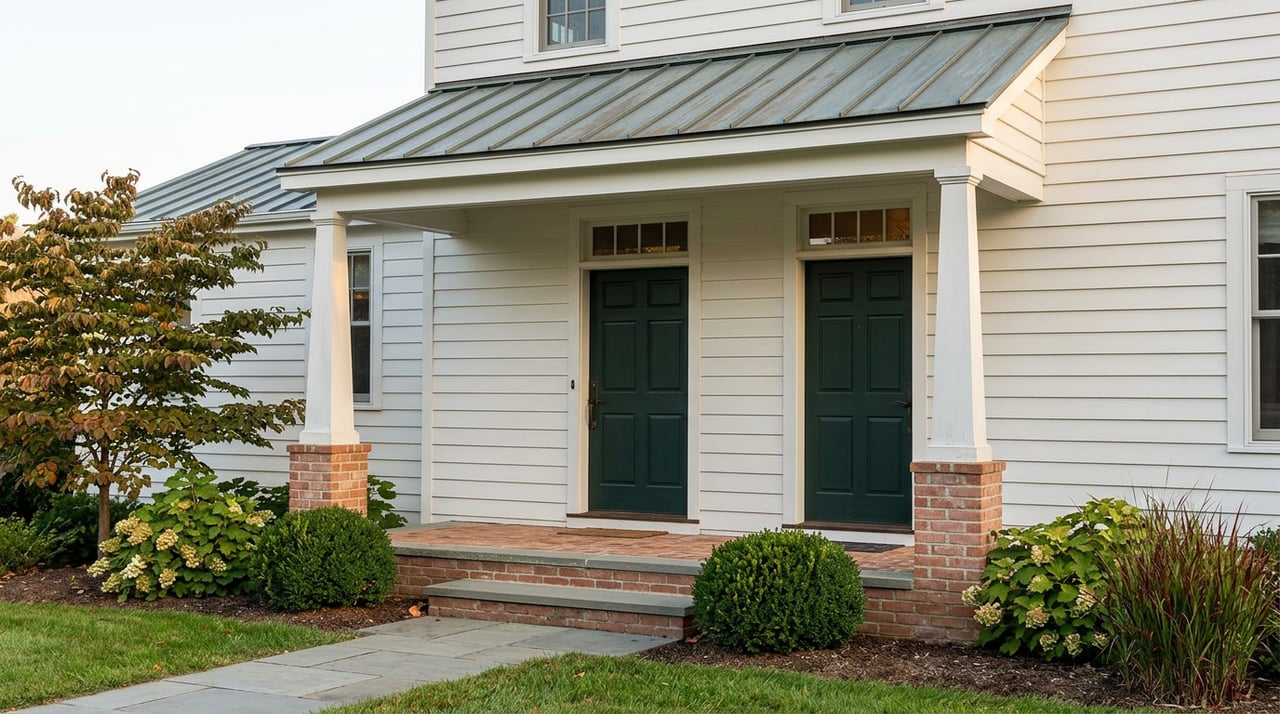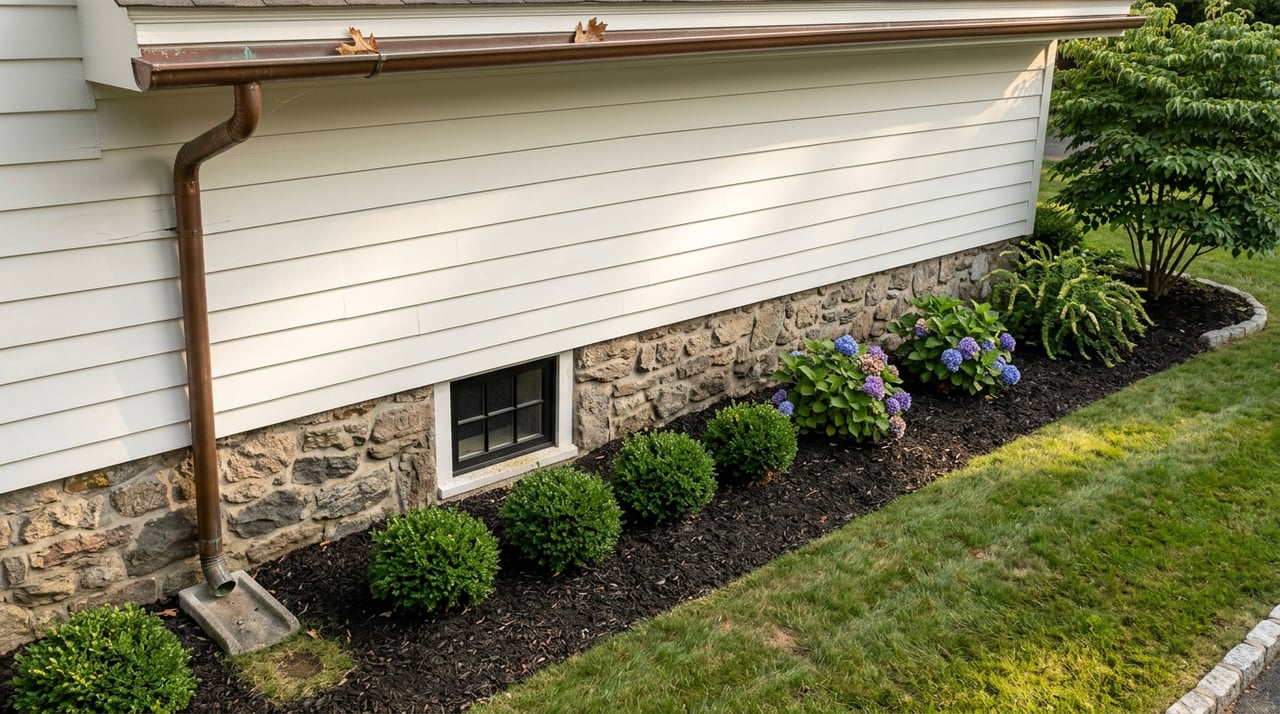
If you own one of Glen Head's older Colonials or Capes, the underground oil tank question is not really about the tank. Most of the tanks quietly buried under North Shore lawns since the 1930s through the 1980s turn out to be fine, or were properly decommissioned by an owner who knew what they were doing decades ago. The part that actually stalls a closing is the paper trail, or the lack of one, and that part changed in 2024 in a way many Glen Head homeowners have not caught up with yet.
New York tightened its seller disclosure law, and Nassau County layered its own filing requirement on top of the state form. Together they mean a seller who assumes "we switched to gas years ago, so this doesn't apply to us" can walk into a signed contract without the documentation a lender, insurer, or buyer's attorney will now expect to see. The tank is usually the cheap problem. The gap in paperwork is the one that eats weeks off a timeline.
The disclosure form got stricter in 2024, and it applies to your listing now
For years, New York sellers had a workaround built into the Property Condition Disclosure Act: skip the form entirely, hand the buyer a flat $500 credit at closing, and move on. That shortcut ended on March 20, 2024, when the state amended Real Property Law Article 14. Sellers are now required to complete the actual disclosure statement, not buy their way out of it.
The current form asks directly whether there are, or ever were, fuel storage tanks above or below ground on the property. It follows with whether any tank is currently in use, where it is located, and whether it is leaking or has ever leaked. A seller who converted to gas heat in 2005 and never thought about the old tank again still has to answer those questions accurately, because the form covers "ever," not just "currently."
What "in use," "ever leaked," and "currently in use" decide
Those three follow-up answers are doing more work than they look like they're doing. They are the record a buyer's attorney forwards to a lender and an insurer before either one commits to the deal. A tank marked "removed, no leak, documentation attached" reads as a closed file. A tank marked "unknown" or left blank because the seller genuinely does not know reads as an open question, and open questions are what lenders use to pause a mortgage approval or ask for additional testing outside the standard inspection window.
This is also where a general home inspection stops being enough. A standard inspection is visual. An inspector can note signs of a former oil system, a capped fill pipe, a suspicious depression in the lawn, but will not excavate or run soil samples. If the disclosure form is going to say anything more definitive than "unknown," that information has to come from a separate tank sweep or scan, done before the buyer's attorney asks for one on a deadline.
The sweep is cheap. The unknown behind it is not.
This is the part worth sitting with, because the cost curve is not what most sellers picture. Long Island contractor pricing for 2026 makes the gap clear:
| Scenario | Typical Long Island cost |
|---|---|
| Above-ground tank removal | Roughly $408 to $1,001, averaging around $696 |
| Standard underground tank removal, no contamination | Roughly $1,500 to $3,000, with underground work starting near $2,500 |
| Soil remediation after a confirmed leak | Commonly $8,000 to $10,000 or more, depending on how far contamination has traveled |
The jump between the middle row and the bottom row is the entire reason this question matters more than it used to. A clean underground tank is a manageable line item, often smaller than a new water heater. A leaking one turns into a five-figure liability that a title company will not let close over, and depending on how long the leak has been active, the number climbs from there. The only way to know which scenario you are in before you are already under contract is to test early.
Nassau County adds its own form on top of the state one
The state disclosure form is not the only paperwork involved. Nassau County requires a Tank Abandonment/Removal Notification Form to be filed with the county Health Department before a tank is abandoned or removed, and the county's rules specifically cover any tank of 1,100 gallons or less that was formerly used for on-site heating, which describes the vast majority of residential tanks on the North Shore. This is a county-level step that sits outside the state's disclosure statement entirely, and it is the piece sellers most often discover for the first time when their attorney raises it mid-contract rather than before listing.
Filing that notification, waiting on county turnaround, and completing removal or abandonment all take real time. Building that time into a listing plan, rather than into a contract deadline, is the difference between a tank question that resolves quietly and one that becomes a renegotiation.
Why this shows up more often in Glen Head than the county average suggests
Glen Head's housing stock is part of the reason this question comes up as often as it does here. The hamlet's Colonials and Capes were largely built in the era when heating oil, not natural gas, was the standard, and many homes were converted to gas over the following decades without a full tank removal to match. One Nassau County home inspection company that services Glen Head describes its own findings plainly: inspectors there "regularly find oil tanks that are/were located underground" and flag the property for further checking because remediation, if needed, can be expensive. That is not a rare edge case on a two-and-a-half-story Cape with a fill pipe still visible along the foundation. It is a routine finding in exactly the kind of home that defines this neighborhood's character.
A timeline that keeps this from stalling your closing
For a seller preparing to list an older Glen Head home, the sequence that avoids surprise looks like this:
- Before listing, order a tank sweep or scan if the home predates a documented gas conversion, or if conversion records are missing. This is the cheapest step in the entire process and the one that determines everything after it.
- If a tank is found, start documentation immediately. Get a written report from a licensed contractor and begin the Nassau County notification process rather than waiting for a buyer to request it.
- Complete the disclosure form with the sweep results in hand, attaching the report rather than checking "unknown." A documented answer protects the seller from a later claim that the disclosure was incomplete.
- Loop in the buyer's lender and insurer early if a tank is found active, recently removed, or previously abandoned. Financing and insurance underwriting move faster when they are not discovering the issue for the first time during attorney review.
- Build the county's permit and inspection turnaround into your contract timeline, not around it. A notification filed the week before closing is a common reason closings slip.
FAQ
Do I have to remove a tank I stopped using years ago? New York does not require removal on a fixed schedule, but the disclosure form still requires you to say whether one exists and whether it has ever leaked. A tank sitting unused with no documentation of proper abandonment is exactly the scenario that raises questions for a lender.
If we converted to gas decades ago, does this stop applying to us? No. The disclosure form asks whether a tank was ever on the property, not only whether one is currently active. A conversion without a documented tank removal or abandonment still needs to be addressed in the paperwork.
Who typically pays for removal, buyer or seller? It is negotiable and usually settled during attorney review, but sellers who address it before listing, rather than during contract negotiations, tend to keep more control over both the cost and the timeline.
Older homes are one of the reasons buyers choose Glen Head in the first place, and that character does not need to come with an unmanageable process attached to it. If you are weighing when to list a home that predates the gas era, or you are evaluating one as a buyer and want a straight answer about what the paperwork actually requires, Myla Borucke can walk through the specifics with you before it becomes a contract deadline. Let's Connect.