If you have ever looked at homes in Glen Head and thought, why do so many houses feel familiar but still a little different? you are not imagining it. Glen Head’s housing stock has a clear North Shore personality, but it is shaped more by early- to mid-20th-century suburban growth than by a large supply of much older colonial-era homes. When you understand the main architectural styles around Glen Head, it becomes much easier to read listings, spot what fits your lifestyle, and know what details deserve a closer look. Let’s dive in.
Why Glen Head’s housing looks this way
To understand Glen Head architecture, it helps to start with the area’s growth pattern. According to the Gold Coast Public Library’s local history overview, Glen Head was largely farmland with scattered homes and estates before 1920, and subdivision activity in the 1910s and 1920s helped shape the neighborhood fabric you see today.
That history matters because it explains why many homes in Glen Head feel more suburban than colonial in the oldest-historic sense. In practical terms, you are often looking at early- to mid-20th-century North Shore housing, with Colonials and Capes appearing most often, plus some Tudors and other decorative styles in the broader area.
Colonial homes in Glen Head
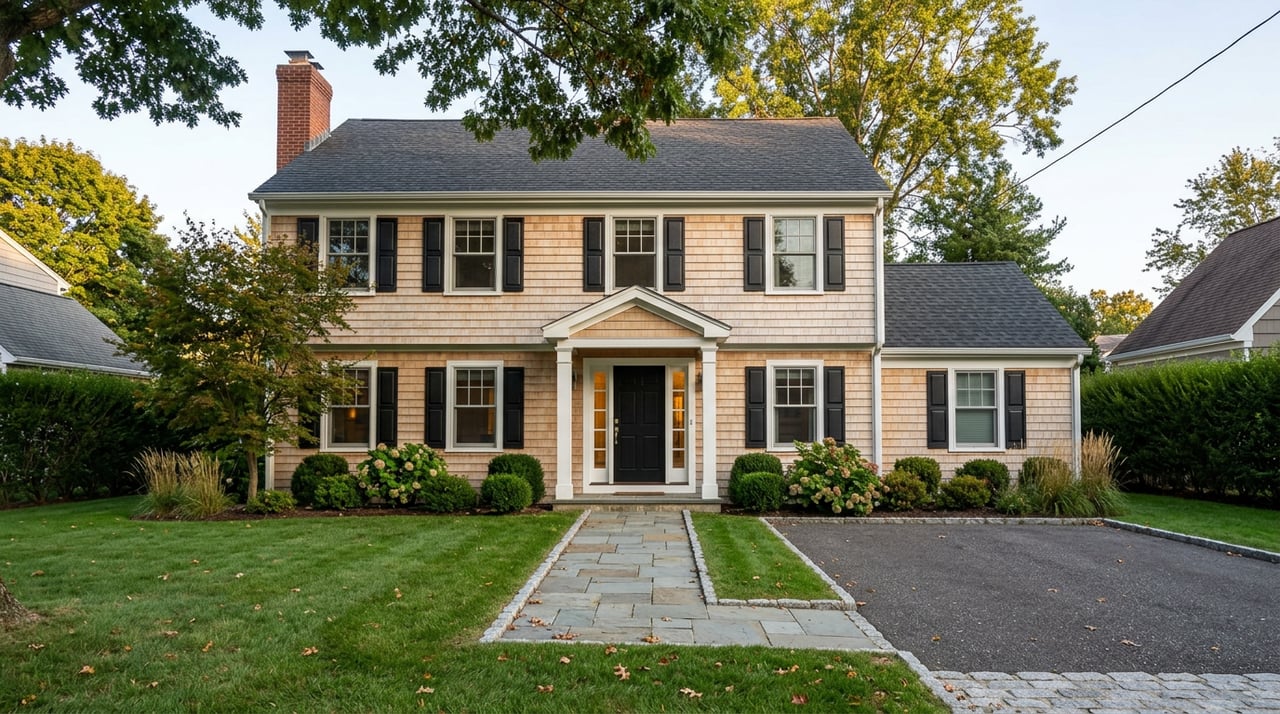
Colonial and Colonial Revival homes are some of the most visible styles in local inventory. Recent Glen Head area listings have included Colonial, center-hall Colonial, brick Colonial, and Georgian Colonial homes, which reflects how common this architectural language is in the area.
In style terms, Colonial Revival homes are typically symmetrical, with a centered front door, multi-pane sash windows, and gable, hip, or gambrel roofs, according to Historic New England’s architectural style guide. Later versions may also use brick or stone veneer and sometimes have interiors that feel more open than the exterior suggests.
How Colonial homes usually live
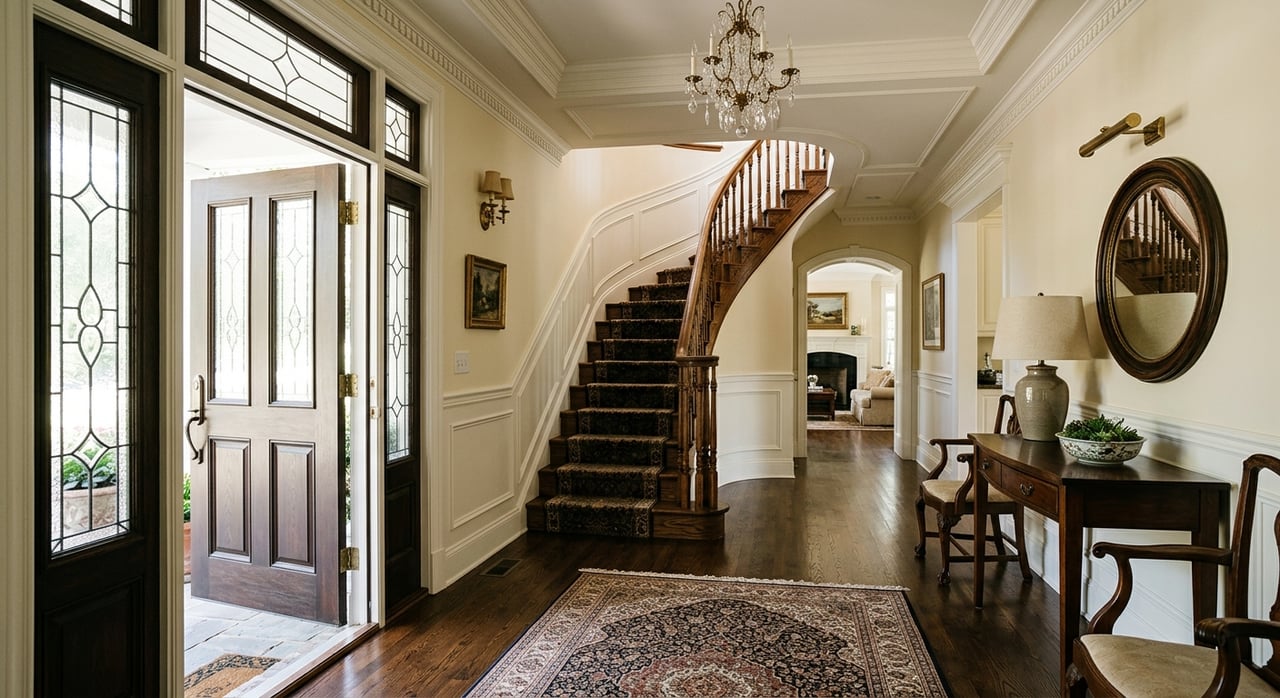
If you like a home with a more orderly layout, a Colonial may feel like a natural fit. These homes often offer straightforward room separation and easy front-to-back circulation, which can appeal to buyers who want clearly defined living spaces.
That said, not every Colonial will live the same way. Some later Colonial Revival homes borrow the exterior symmetry of older designs but have more flexible interior layouts, so it is always worth comparing the facade to the actual floor plan.
What to watch in a Colonial
From a practical standpoint, the main areas to evaluate are often:
- Roof condition
- Siding or exterior cladding
- Window age and performance
- Quality of later additions or alterations
- How any expansion fits the original structure
Because symmetry is such a big part of the style, additions can sometimes feel very seamless or very obvious. That does not make them good or bad, but it does make them worth reviewing carefully.
Cape Cod homes in Glen Head
Cape-style homes are another major part of the Glen Head housing mix. Local listings regularly include Cape Cod, expanded Cape, and Cape-style cedar-shake homes, which makes this one of the most relevant styles for day-to-day buyers in the area.
The Washington State architectural style guide for Cape Cod Revival describes the style as a simple one- to one-and-a-half-story rectangular house with a steep roof, limited ornament, multi-pane windows, shutters, and often brick chimneys. In some cases, attached wings or garages were added over time.
How Cape homes usually live
Capes often feel efficient and practical. The main floor can make very good use of space, while upper-level rooms are often tucked under the roofline, which gives them character but can also mean angled ceilings and slightly different furniture layouts.
An expanded Cape can offer more space than you might expect from the street view. If you are touring one, it helps to look beyond square footage and ask how the addition changed the flow, ceiling heights, storage, and natural light.
What to watch in a Cape
With Cape homes, the roofline tells you a lot. Dormers, rear additions, and attached sections are often the places where changes and maintenance issues tend to concentrate.
As you tour a Cape, pay special attention to:
- Roof age and condition
- Dormers and flashing
- Signs of wear where additions meet the original structure
- Upstairs room functionality under sloped ceilings
- Insulation and ventilation in upper areas
For many buyers, a Cape is appealing because it feels approachable and manageable. The key is understanding whether the version you are seeing is a compact original layout or a larger expanded home with a more layered history.
Tudor homes and decorative North Shore styles
Tudor homes are less common than Colonials and Capes in Glen Head, but they are still part of the local search landscape. Nearby historic context also supports that mix. The Roslyn Heights Historic District includes Tudor Revival along with Colonial Revival, Queen Anne, Prairie/American Foursquare, and Craftsman styles.
That broader North Shore context helps explain why you may occasionally see a more decorative house appear in or around Glen Head. These homes can bring a lot of visual charm, especially through masonry, rooflines, chimneys, and trim details.
How Tudor-style homes usually live
Tudor and storybook Tudor homes often stand out for their character first. They may have a more intimate, custom feel than a simpler Colonial or Cape, and the visual detail can be a big draw for buyers who want something less uniform.
At the same time, more decorative architecture usually means more complexity. In practical terms, that can mean more exterior materials to maintain and more details to evaluate during the buying process.
What to watch in Tudor-style homes
Compared with simpler forms, Tudor-style houses often deserve extra attention around:
- Masonry and chimney condition
- Complex rooflines
- Exterior trim details
- Window type and maintenance history
- Areas where decorative elements may have aged differently
If you love the look of a Tudor, that style can be incredibly rewarding. You just want to go in with a clear understanding of the upkeep that can come with more ornamental design.
Classic village homes and vernacular houses
In Glen Head, you may also hear people describe a property as a classic village home. That is more of a local shorthand than a strict architectural category, but it is useful. It generally points to modest older suburban houses that reflect long-running vernacular building traditions rather than one formal textbook style.
The Roslyn Village Historic District documentation describes wood-frame houses on small lots and notes that much of the district reflects two centuries of vernacular building traditions. It also notes that between 1910 and 1936, Colonial Revival, Georgian Revival, and Neoclassical forms became predominant, often with shingle exteriors tied to Long Island building traditions.
How classic village homes usually live
These homes often have smaller rooms, older wood-frame construction, and signs of updates completed in stages over time. That can create real charm, but it can also mean more variation from house to house.
A village-style home may not fit neatly into one style label, and that is okay. What matters most is how well the house has been maintained and modernized while preserving the features that make it special.
What to watch in village homes
When you tour this kind of house, take a close look at:
- Siding and exterior wood surfaces
- Porch condition
- Window age and operation
- Mechanical system updates
- Evidence of piecemeal renovations
These homes can offer warmth and personality that many buyers love. They simply benefit from a careful, detail-oriented review.
Nearby North Shore styles add context
Glen Head does not exist in a vacuum, and nearby communities help explain the local architectural vocabulary. Roslyn Heights shows a mixed historic district where Colonial Revival is predominant, but Tudor Revival, Queen Anne, Prairie/American Foursquare, and Craftsman are also present.
Roslyn Village adds another layer, showing how classical revival forms and shingle exteriors can come together in a village setting. Sea Cliff, by contrast, reflects a more picturesque resort tradition, with National Register documentation describing late-19th-century Queen Anne houses with towers, wraparound porches, and decorative exterior details.
The broader North Shore also includes Shingle Style architecture, though Historic New England notes that it reached its highest expression in seaside resort settings such as eastern Long Island. For Glen Head buyers, that means Shingle Style is useful as local context, even if it is less common in the average Glen Head suburban streetscape.
Which style may fit your lifestyle
If you are trying to narrow your search, the most helpful question is often not which style is best, but which style lives the way you want to live.
Here is a simple way to think about it:
| Style | Often appeals to buyers who want | Common things to review |
|---|---|---|
| Colonial | Defined rooms, symmetry, traditional layout | Roof, siding, windows, additions |
| Cape | Efficient footprint, manageable scale, flexible use | Dormers, rooflines, upper-level function, additions |
| Tudor | Character, craftsmanship, standout curb appeal | Masonry, chimneys, trim, complex roofs |
| Classic village home | Charm, older details, one-of-a-kind feel | Wood surfaces, porches, windows, systems |
No matter the style, the smartest approach is to balance appearance with function. A home can be beautiful from the street, but your day-to-day experience will depend on layout, maintenance history, and how well the house has adapted over time.
A practical way to tour Glen Head homes
When you walk through homes in Glen Head, try to separate three things: style, condition, and livability. Those are related, but they are not the same.
A Colonial may present as formal outside and feel more open inside. A Cape may look compact but offer surprisingly usable expansion. A village home may have less square footage on paper but more charm and individuality than a newer alternative.
That is where local guidance can make a real difference. When you understand how Glen Head’s architecture developed and what each style typically brings, you can make better decisions with more confidence.
If you are thinking about buying or selling on the North Shore, Myla Borucke offers clear, hands-on guidance to help you evaluate homes, position your property thoughtfully, and move through the process with confidence.
FAQs
What architectural home styles are most common in Glen Head?
- In Glen Head, buyers are most likely to see Colonials and Capes, with some Tudors and other decorative North Shore styles appearing in the broader area.
Why does Glen Head have so many early- to mid-century homes?
- Glen Head’s current neighborhood fabric was shaped largely by subdivision activity in the 1910s and 1920s, after an earlier period when the area was mostly farmland with scattered homes and estates.
How can you tell if a Glen Head home is a Colonial?
- A Colonial or Colonial Revival home often has a symmetrical facade, centered front door, multi-pane windows, and a gable, hip, or gambrel roof.
What should buyers look for in a Glen Head Cape house?
- In a Glen Head Cape, it is smart to review the roofline, dormers, additions, and how functional the upper-level rooms are under the sloped ceilings.
Are Tudor homes common in Glen Head, NY?
- Tudor homes are less common than Colonials and Capes in Glen Head, but they are part of the local search landscape and are supported by the broader architectural character of nearby North Shore communities.
What does a classic village home mean in the Glen Head area?
- In the Glen Head area, a classic village home usually refers to an older, modest suburban house shaped by vernacular building traditions rather than one strict formal architectural style.